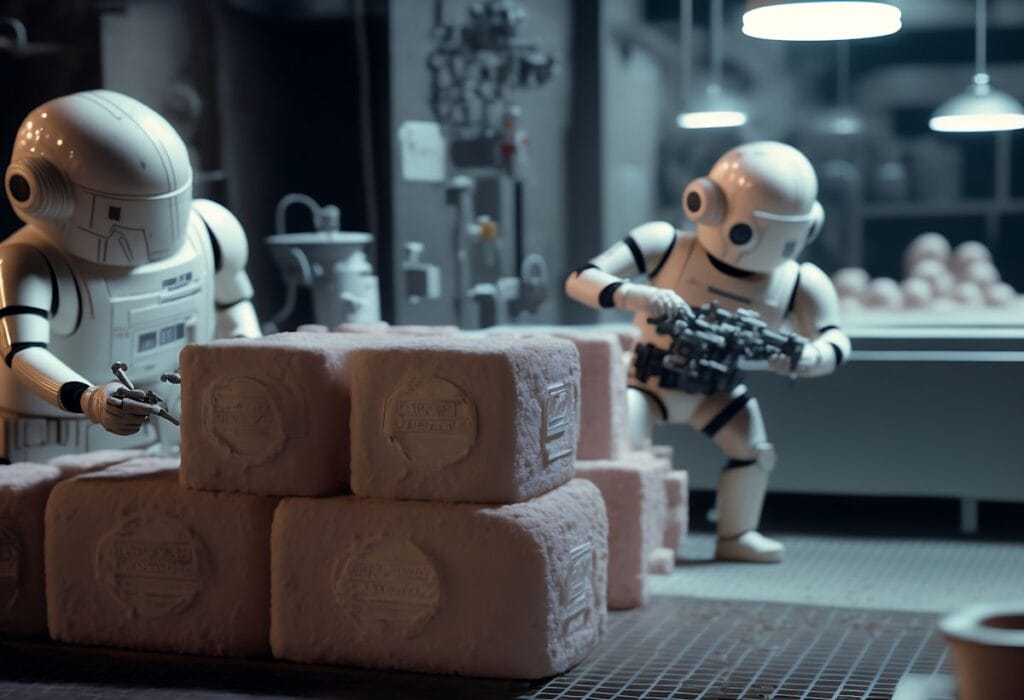
The AI image generator landscape has never moved faster than it is right now. In late 2025 and early 2026, two models emerged as clear frontrunners: OpenAI’s GPT Image 1.5 — the engine powering ChatGPT’s rebuilt creative studio — and Google’s Nano Banana Pro, built on the Gemini 3 Pro architecture and widely praised for photographic realism. Together, they represent a generational leap in what AI-powered image creation can do. Consequently, millions of creators, marketers, and developers are actively trying to figure out which tool fits their workflow — and which one to pay for.
Why the AI Image Generator Race Matters Right Now
The competition driving these upgrades is fierce. According to TechCrunch, OpenAI CEO Sam Altman declared an internal “code red” after Google’s Gemini 3 and Nano Banana Pro gained significant market share in late 2025. OpenAI accelerated its release schedule in direct response, shipping GPT Image 1.5 in December 2025 — ahead of the originally planned timeline.
Meanwhile, roughly 71% of images shared on social media platforms today are either AI-generated or AI-edited. Furthermore, the global AI image editing market is valued at $88.7 billion in 2025 and is expanding rapidly. As a result, the choice of AI image generator has become a practical business decision, not just a creative preference.
Both models are now available to everyday users at no extra cost beyond standard subscription tiers. Therefore, the question is no longer “which can I afford?” — it is “which one actually does what I need?”
What Is GPT Image 1.5? Everything New From OpenAI’s AI Image Generator
GPT Image 1.5 is OpenAI’s latest AI image generator model, available inside ChatGPT and via the API. OpenAI introduced it in December 2025, rolling it out to all ChatGPT users — Free, Plus, Pro, and Team — simultaneously. The API version is accessible as gpt-image-1.5, and image input/output costs are 20% cheaper than the previous GPT Image 1.
The headline improvement is speed. According to OpenAI, GPT Image 1.5 generates images up to 4× faster than its predecessor. For anyone who has waited 30 to 60 seconds per image during peak usage, that change transforms the experience significantly.
Beyond speed, the model delivers markedly better instruction following. Earlier AI image tools often misinterpreted complex prompts, rearranging compositions when users requested small edits. GPT Image 1.5 addresses this by keeping lighting, facial likeness, composition, and color tone consistent across iterative edits. Additionally, it can handle complex prompts involving 10 to 20 distinct objects, compared to the 5 to 8 typical of older models.
OpenAI also launched a new dedicated Images workspace in the ChatGPT sidebar, complete with style presets, trending prompts, and an automatic image library — turning ChatGPT into what the company describes as a “creative studio in your pocket.”
What Is Nano Banana Pro? Google’s AI Image Generator Explained
Nano Banana Pro is Google’s flagship AI image generator, built on the Gemini 3 Pro model. It launched in November 2025 and quickly topped multiple benchmarks on the LMArena leaderboard. The name might be quirky, but the output is anything but: reviewers consistently describe it as producing images that look like they were taken by a professional photographer using a real camera.
What sets Nano Banana Pro apart is its approach to photographic realism. While GPT Image 1.5 tends to produce polished, commercial-grade visuals, Nano Banana Pro leans toward candid imperfection — natural grain, authentic lighting, and the kind of subtle flaws that make a brain accept an image as a genuine photograph rather than a generated file.
The model also excels in advanced editing controls: studio-grade options for lighting, camera angle, focus, aspect ratio, and color grading. Moreover, Nano Banana Pro’s 2K resolution output and superior text-in-image rendering make it especially strong for editorial work, infographics, and brand content.
GPT Image 1.5 vs Nano Banana Pro: AI Image Generator Side-by-Side
| Feature | GPT Image 1.5 (OpenAI) | Nano Banana Pro (Google) |
|---|---|---|
| Generation Speed | ⚡ 4× faster than predecessor | Fast at high resolutions |
| Photorealism | Polished / commercial aesthetic | 🏆 Candid, cinematic realism |
| Text Rendering | Good; improved over v1 | 🏆 Superior (infographics, banners) |
| Instruction Following | 🏆 Highly reliable; predictable | Strong; occasional drift on edits |
| Iterative Editing | 🏆 Excellent consistency across edits | Good; can shift scene on edits |
| Output Resolution | Up to 1792×1024 (default 1024²) | 🏆 Up to 2K resolution |
| API Availability | ✅ Yes (gpt-image-1.5) | ✅ Yes (Gemini API) |
| Best For | Speed, iteration, prompt control | Realism, text, editorial images |
Speed and Editing: Where the AI Image Generator Gap Shows
For creators who work iteratively — generating, tweaking, and regenerating multiple times to reach a final image — GPT Image 1.5 is the stronger AI image generator. Its 4× speed improvement makes rapid prototyping genuinely practical, and its ability to preserve facial likeness, lighting, and composition across edits is a major workflow upgrade.
Nano Banana Pro, however, often leads in raw generation speed at higher resolutions, making it the better choice when you need a single high-quality output rather than repeated rounds of refinement. Additionally, its studio-grade post-production controls — including camera angle adjustments and localized edits — give professional designers finer control than either tool offered just a year ago.
As one analyst put it, GPT Image 1.5 is built for iteration, while Nano Banana Pro is built for output quality. Neither is the universal winner. Instead, the right AI image generator depends entirely on what kind of work you do.
Text Rendering and Infographics: A Critical AI Image Generator Difference
One of the most revealing areas of difference is text rendering — the ability to include readable, correctly spelled words inside a generated image. This has been a persistent weakness across AI image generators for years.
Nano Banana Pro currently holds the clear lead in this category. Testing across multiple independent benchmarks confirms that it produces clean, correctly rendered text even in dense layouts, such as infographics with multiple sections, headers, and body copy. Furthermore, its performance on multi-language text — including non-Latin scripts — is notably stronger than its rivals.
GPT Image 1.5 has improved significantly over the original GPT Image 1. However, reviewers still note occasional inconsistencies with smaller font sizes and complex multi-column layouts. Therefore, if you regularly create banner ads, blog headers with text, or data visualizations, Nano Banana Pro is the more reliable AI image generator for those tasks.
Which AI Image Generator Should You Use in 2026?
Choose GPT Image 1.5 if you:
- Generate images in high volume and value speed above all else
- Need a reliable creative studio integrated directly into your chat workflow
- Work with brand assets that require consistent character and composition across multiple edits
- Use the OpenAI API and want the most cost-effective image output (20% cheaper than GPT Image 1)
- Create marketing mockups, UI prototypes, or concept visuals at scale
Choose Nano Banana Pro if you:
- Prioritize photorealistic output that looks like authentic photography
- Need text-heavy images such as infographics, editorial layouts, or poster designs
- Want cinematic lighting controls and studio-grade post-production options
- Produce content for Pinterest, editorial blogs, or premium brand channels where realism matters most
- Generate images at 2K resolution for print-adjacent applications
Notably, the expert consensus from most reviewers in 2026 is: try both. Both tools are available through standard subscriptions, and the fastest path to the best image is to run the same prompt through each and compare the results directly.
AI-Generated Images and File Formats: What to Do Next With Your AI Image Generator Output
Once you have your AI-generated image, the file format you save it in matters — especially for web performance. Both GPT Image 1.5 and Nano Banana Pro typically output standard JPEG or PNG files by default. However, to get the best performance on a website, those files should ideally be converted to WebP or AVIF before publishing.
Converting a 400 KB JPEG hero image to AVIF, for example, typically reduces the file size to 160–240 KB while maintaining identical visual quality. That directly improves page load speed and Google Core Web Vitals scores. Tools like ZizzleUp’s free online image converter let you convert JPG, PNG, or any other format to WebP or AVIF instantly — no account or software required. It takes seconds, and the impact on your PageSpeed score can be significant.
As you integrate AI-generated visuals into your content workflow, adding a format conversion step is a simple, high-leverage optimization that most creators overlook.
Conclusion: Who Wins the 2026 AI Image Generator Battle?
Neither tool is a clear knockout winner — and that is actually great news for users. The competition between OpenAI and Google has pushed both AI image generators to levels that felt impossible just 18 months ago.
GPT Image 1.5 wins on speed, iteration consistency, and API cost efficiency. Nano Banana Pro wins on photorealism, text rendering, and output quality for high-stakes creative work. Together, they represent the new baseline for what an AI image generator should be capable of in 2026.
Watch this space closely. OpenAI has signaled continued rapid releases, and Google is unlikely to cede any ground. The second half of 2026 may bring another round of major upgrades from both camps — making this the most exciting period in the history of AI-powered image creation.
Sources
- 🔗 OpenAI – The New ChatGPT Images Is Here (GPT Image 1.5 Official Announcement)
- 🔗 TechCrunch – OpenAI’s Code Red: GPT Image 1.5 Launch Coverage
- 🔗 Wikipedia – GPT Image Model History and Release Timeline
- 🔗 Medium / Data Science in Your Pocket – GPT Image 1.5 vs Nano Banana Pro Practical Comparison
- 🔗 getimg.ai – GPT Image 1.5 vs Nano Banana Pro: Independent Benchmark Tests
- 🔗 Cybernews – GPT Image 1.5 vs Nano Banana Pro Full Comparison
- 🔗 AI Business – OpenAI Updates ChatGPT Images Tool
- 🔗 Arahi AI – ChatGPT Image 1.5 Full Guide: What Changed and How to Use It
- 🔗 Photoroom – 50 AI Product Photography Statistics and Trends for 2026
- 🔗 Microsoft Azure – GPT Image 1.5 Now Available in Microsoft Foundry
- 🔗 LTX Studio – AI Image Trends in 2026: Authenticity, Collaboration, and Surreal Experimentation
Published by ZizzleUp — free online image tools including JPG to PNG converter, WebP converter, AVIF converter, image compressor, and more. No signup required, no file size limits for most conversions.